Thursday, April 8, 2021

Review of Sunday's Child - a Regency romance by Rosemary Morris


Find it at your favorite store HERE


I loved this Regency romance, with a young but feisty heroine fiercely protecting her siblings against a ruthless Earl who doesn’t accept rejection. Georgianne is also practical. Marriage is not about love but about her duty to protect and provide for her family. When Tarrant, a childhood friend back from the war, offers marriage and protection, she accepts. But in her innocence, she is not prepared to deal with a soldier whose wounded soul hurts worse than his physical scars.

While the defeat of Napoleon Bonaparte seems imminent, the war took its toll on British soldiers. Dead or wounded fathers and brothers left families in ruins. Yet, the fancy balls do not stop, but under the shiny varnish of silk ribbons, diamonds, and gems, the story unveils the ugly underbelly of British aristocracy… alcohol, laudanum, and unnatural appetites of the rich, who think everything and everyone is for sale, and whatever they desire must be theirs by right.

Review by Vijaya Schartz
http://www.vijayaschartz.com  


Friday, March 5, 2021

WHO WERE THE PALADINS OF CHARLEMAGNE - by Vijaya Schartz


The Curse of the Lost Isle series starts in the time of Charlemagne and the Viking Invasions and ends during the Crusades.Find these books on my page at BWL Publishing HERE


When Charlemagne ascended to the Frankish throne in 968AD, he designated twelve Paladins to help him rule the Frankish Kingdom. They were highly trained noblemen, expert swordsmen and fierce warriors. They, took a solemn oath of fealty and swore to abide by Christian rules. Some say they were the first chivalric Christian Knights. Others argue they were Charlemagne’s henchmen, extortioners and executioners… which, in these violent and troubled times might be closer to the truth.


Ending the Dark Ages, Charlemagne united Europe in the name of Christianity, against invaders from the north (Vikings) and the Saracens in Spain. He beat medieval Europe into submission and imposed strict Christian rule. He established schools, promoted education, the copy of illuminated religious manuscripts, art, architecture, and he also maintained a formidable army.


On the battlefield, after a victory, Charlemagne gathered the surviving enemy soldiers, made them kneel, and gave them a choice. Convert to Christianity and join his army, or be beheaded on the spot. Of course, many converted, giving the new faith lip service only. Better be a live Christian than a dead Pagan, right?


Still, a number of vanquished soldiers chose death over conversion. Pagan roots ran much deeper than Christianity in many places.


The Celts, in particular, gave Charlemagne a difficult time. Especially the small kingdom of Brittany (French Bretagne) a bed of Celtic culture and legends, the birth place of Merlin, the place where legends of Vivian the Fae, Morgan the Fae, Pressine the Fae, Palatina the Fae, Meliora the Fae, and Melusine the Fae, still flourish, among other myths.

To deal with these pesky Celts, Charlemagne nominated his trusted nephew, the Paladin Roland, to administrate the Marshes of Brittany on the western frontier.


Roland is still famous in France and throughout Europe. This is his statue in Metz, France, not on a church or historical building, but at the train station.

The story of Roland:

Roland sworn in by Charlemagne as a Paladin knight

Roland, and Olivier, his childhood friend, swore fealty together as Paladins of Charlemagne. Roland is poetically associated with his sword Durandal, his horse Veillantif, and his oliphant horn.

The Song of Roland written much later, lists the twelve paladins as Roland, Olivier, Gérin, and Gérier (killed by the Saracen, Grandonie), Bérengier, Otton, Samson, Engelier, Ivon, Ivoire, Anséis, and Archbishop Turpin ...

There is also mention of Fierabras (meaning proud with strong arms), a converted Saracen knight who seems to have served as the basis for the legend of Percival, of King Arthur’s legends. Yes, medieval romantic tales often tend to ignore chronology as well as historical facts and dates… unless you consider reincarnation or immortality.


While returning from fighting the Saracens in Spain, Roland, closing the long column through the pass of Roncevaux in the Pyrenees, was ambushed by the Basques. He sounded his oliphant horn, calling for help. But his conniving uncle at the head of the march pretended not to hear the oliphant and refused to turn back to help. Grossly outnumbered, Roland and his company fought bravely. Roland, at the end, broke his faithful sword, Durandal, on a boulder, so it wouldn’t fall into heathen hands. Roland and his company were killed to the last, in Roncevaux in 778AD.

Roland breaking his sword on a stone

On Christmas day in 800AD, in Rome, Charlemagne was crowned Roman Emperor of Occident by Pope Leo III. The great emperor died in 814AD. 


But his Paladin knights still fascinate modern youth and keep gathering fame in children’s books and videogames.


If you enjoy reading the heroic myths and legends of the time, I recommend The Curse of the Lost Isle series, based on the Celtic legends of Brittany. The first two books are set in Scotland during the Viking invasions. Then the story of this family of immortal ladies spreads to Luxembourg, France, Germany, Spain, Italy, and the middle East during the Crusades.


Princess of Bretagne, Curse of the Lost Isle, book 1
Currently $1.49 in kindle. Also available in paperback
Find it at your favorite online store HERE 

"Well-written and researched, Vijaya Schartz's "Princess of Bretagne' is a joy to read. Although it is a fantasy, Ms. Schartz deftly weaves in historical aspects and customs of those times. One overriding theme is the clash between paganism and early Christianity during the Dark Ages.... a worthwhile and entertaining read." 5 stars review.

Happy Reading.

Vijaya Schartz, author
Strong Heroines, Brave Heroes, cats
http://www.vijayaschartz.com
amazon - B&N - Smashwords - Kobo - FB 

Monday, February 8, 2021

How Medieval French influenced the English language - by Vijaya Schartz

 According to Merriam Webster, there are over 7,000 French words today in the English language. The pronunciation and spelling might differ slightly, but they are plainly recognizable. 

So many familiar words in the English language are French, like: attache, avant-garde, aviation, bachelor, ballet, bon voyage, brunette, bureau, cabaret, chauffeur, chic, cliché, cul-de-sac, debris, deja-vu, delegate, detour, dossier, elite, expatriate, façade, fiancé, film noir, gallery, gazette, heritage, homage, hotel, identity, illusion, insult, irony, liaison, literature, machine, magnificent, massage, metabolism, neutral, novel, occasion, parasol, recipient, reservoir, ricochet, rich, ridicule, risqué, sabotage, sentiment, silhouette, solicitor, souvenir, technique, uniform, variety, etc. to name a few. 


Since the French and the British were enemies for centuries, why did so many French words make it into English? We all learned in school that the Normans, Vikings who had settled in Normandy, led by William the Conqueror, conquered England in 1066, by winning the battle of Hastings. 


After their victory, these French speaking Normans established a new nobility in England, and used French as the official language of the English court. And for two centuries, all legal and official English court documents were written in French. The Norman nobles took control of the lands by marrying into former English nobility. In time, the two languages and the two cultures melded. 


During the Crusades, Richard Lionheart battled in France, to reclaim French territories previously owned by the Normans. This conflict about territory between the English and the French led to the 100-year war (1337-1453) during which English soldiers lived and battled in France, some of them for most of their lives. 


For these reasons, many medieval English words were derived from the French, and French words and expressions survived a thousand years into the English language. Words like chivalry, majesty, archer, assault, court, dungeon, enemy, felony, honor, injury, judge, justice, liberty, noble, prison, parliament, quarter, royal, robe, sir, survive, tournament, treason, uncle, among many others, are French words brought by the Normans.


As for the modern French words in the English language, many come from cooking terms. Rather than making up an English word, it’s easier to use the original French word and Anglicize it. So, in a “restaurant” on the “Menu” you can have your potatoes “sauteed,” with a “soup” and a “roux,” eat an “omelet” a “salad” or “escargots” which are the most common variety of snails. But snails sound slimy, while “escargots” sound like a culinary delight. 

A “cuisine,” in French, refers to a kitchen. By extension it also means what you cook in it. “Four,” for a French person has nothing to do with numbers. It’s just a baking oven. 

When I first came to America, my husband asked me if I wanted my pie “a la mode.” When I asked him what it meant, he looked flabbergasted that I didn’t understand his French. You see, “a la mode” only means “in fashion,” which is nonspecific and doesn’t relate to pie, or, as I quickly discovered, vanilla ice cream. See, the French do not mix pie with ice cream and would consider this a “faux pas.” I quickly corrected my preconceptions in the matter. Since then, I always eat my pie “a la mode.” 
I also wasn’t familiar with French fries, as there is nothing French about them. Fries were invented in Belgium, where half of the population also speaks French. Maybe that’s what created the confusion. But the French simply call fries “frites” or “pommes frites” as potatoes are “pommes de terre,” which translates as apples of the earth. 

Somehow, because the medieval English nobles spoke French, the French word tends to sound more luxurious. A “mansion” a “manor” or a “chateau” sound like places where upper nobility “resides.” That’s probably why Cadillac calls some of their models “deluxe.” French makes it sound more expensive. 

Another French import is the modest “beret.” It was a traditional civilian cap for centuries, favored by the Basques, long before it was adopted by French Special forces in the 20th century. Shortly after, many other countries adopted the beret as military attire. 


“Cadet” in French means “second son.” In the old days, to avoid dividing the lands, only the oldest son inherited the charge and the fortune of his father. So, the second son had to find a job, and for noble families, short of buying a bishopric, only a military position would do. It’s interesting to note that the American word has evolved to mean a student in a military or law enforcement academy… that they are no longer second sons, and some cadets are now women. Yay! 


Once in a while, the French word has come to mean something else in the English language, just enough to confuse a native French speaker. “Madame,” for example, is a mark of respect in France. But when you speak of a Madame in the US, it’s usually the woman in charge of a house of ill repute. Same word, very different meaning. 


When I first saw a jar of “Marmite” on the shelf at AJ’s I wondered what it could be. Given that a marmite is simply a cooking pot in French. It didn’t tell me what was in it. After tasting it, I could only assume that it was made of the burned residue in old cooking pots, to give some taste to bland English food. In truth, it’s a condiment made from yeast residue in beer vats. 
 

“Coin” in French means corner. In English it’s loose change. This may come from the fact that coins used to be cut into halves and quarters to make change, which created corners. 


“Queue” in French is an animal’s tail. Then it also refers to a waiting line (where impatient dogs would wag their tail). 


“Library” is also a French word, but it means bookstore. For a French person, the familiar place that collects thousands of books you can borrow is called a bibliotheque. 

Talking about books, you can find my Celtic legends everywhere online at the links below, or click on the covers in the right column to find them on amazon.

Vijaya Schartz, author
Strong Heroines, Brave Heroes, cats

Wednesday, January 20, 2021

Vijaya Schartz, BWL top ten bestselling authors for 2020


Just learned that my Canadian publisher, BWL Publishing, named me as one of their ten top bestselling authors for 2020.


BWL is a mid-size traditional press in print and ebooks. I have been published by them for ten years. They presently publish about thirty of my novels. They are not looking for new authors at this time. 


Although 2020 wasn't the best year for me, I feel honored and happy to be part of the BWL family.


Vijaya Schartz, author

Thursday, October 29, 2020

The influence of the Moon on our daily lives - by Vijaya Schartz

Nowadays, few pay attention to the cycles of the Moon, especially if they live in a city. But for others, including farmers and scientists, the Moon has always been a subject of wonder, and for good reason. The Moon affects our everyday lives in ways we do not always suspect.

This year, Halloween falls on a full Moon, the Hunters Moon, which is also a blue Moon. It doesn’t mean the Moon will be blue, only that it's the second full Moon this month, a rare occurrence in itself. And according to the Farmer’s Almanac, we will next see a spectacular Halloween full Moon in the years 2039, 2058, 2077 and 2096. Mark your calendars. 


The first full Moon of October was the Harvest Moon on October 1st, the perfect time for a Harvest Festival. In the old days, for many centuries, and still in traditional farms following the Farmer’s Almanac, the Moon dictates the time of planting and Harvest. Using the natural cycles of dormancy, regeneration, blooming, ripening, etc. to their advantage. 


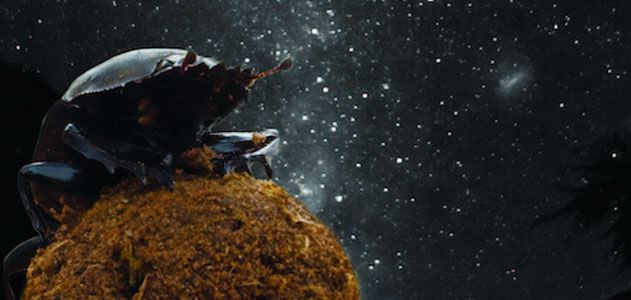
For many animals, particularly birds, the phases of the Moon are essential to navigate during migrations. Other species will time their reproduction to coincide with the lunar cycles. The corals time their spawning between October and December, right after a full Moon. The visual effect of this coordinated lunar timing is so dramatic that it can be seen from space. In Africa, Dung beetles navigate at night by the light of the Moon in a perfect straight line to their burrow. 


The Moon also regulates the ocean tides and influences women’s reproductive cycles. Women are more fecund (assuming a natural cycle) during the full Moon, and both men and women experience increased libido, which leads to fertility. Ancient Pagan festivals celebrated this fact during the full Moon. 


If you take the time, you’ll notice that important movable events (like some religious holidays) are scheduled on or as close to the full Moon as possible, when people have more energy. It’s not a coincidence. It’s also true of certain conventions and conferences who want to attract more people, and these auspicious dates are often booked far in advance.


My mother, who was a hairdresser, told me always to cut my hair a few days after the full Moon, because hair grows faster when the Moon is full, and if you wait, your haircut will look fresh longer. To this day, I still respect that rule. 

The Moon affects our circadian cycles as well. During the full Moon, people complain of not sleeping well and experience Increased energy. This wide-awake state is also responsible for full Moon madness in emergency rooms, and increased number of births in maternity wards – Even the babies want to come out and play. Ask any emergency doctor, maternity nurse, police officer, or EMT, and they will confirm this fact. 


So, this year, we are expecting an energy-filled Halloween night. As for the repercussions in our backyards, coyotes will howl, dogs will bark, and cats will roam longer than any other night. If you plan to take part in the fun, be safe and enjoy. 


But if you are looking forward to a good read with a cup of cocoa by the fire, here are a few suggestions:

Find it HERE
 WHITE TIGER
 Chronicles of Kassouk
 by Vijaya Schartz
 Sci-fi romance
 $1.49 in kindle now HERE

On the frozen plains of Kassouk, where a few aliens rule a medieval Human world, Tora, Human warrior trained by tigers, seeks her father’s murderer. But what she finds at the point of her sword confuses her. How dare Dragomir, the handsome Mutant, question her bloodline and her loyalties? And could a new enemy control the savage hordes of the fringe?

Dragomir offers to help, but Humans and Mutants are forbidden to fraternize under penalty of death... Should Tora trust her mind, her instincts, or her heart?

In the vortex of war, treason and intrigue, among blizzards, avalanches and ambushes, Tora sets out to solve the mystery of her father’s death. When she unveils the secret of her birth, she realizes Dragomir is the key, and together, they must save their planet from the invaders and fulfill their destiny... if they can survive dire persecutions from those they mean to protect.

"...an exceptional tale that belongs in a place of honor on keeper shelves everywhere." Coffee Time Romance - 5-cups

"...this is one futuristic that you do not want to miss!" Fallen Angels Reviews - 5 angels - Recommended Read

"...kept me enthralled from the first page...a thrilling science fiction romance" Paranormal Romance Reviews

"I'm adding this to my 'keeper' shelf and on the 'to be re-read' list." The Road to Romance

Vijaya Schartz, author
Strong Heroines, Brave Heroes, cats

Friday, October 9, 2020

How many books should there be in a series? - by Vijaya Schartz

First of all, the first book in each of my series is currently discounted to $1.49 in kindle on amazon. Enjoy the discounted reads! 


I wrote many series, some as short as two books (the Archangel twin books), others as long as eight novels (like the CURSE OF THE LOST ISLE, based on Celtic legends). New authors, and sometimes readers, ask me how long a series should be. There is no universal answer to that question. A series, like a book, should be as long as needed to tell the whole story. 

Curse of the Lost Isle series - based on Celtic legends

The number of books in a series can also depend upon the characters. 

If they are the same characters throughout the series, is each novel a continuation of the previous book? The author cannot hold the reader without resolution indefinitely. That is how some TV series that started strong lost their momentum when the writers dragged the story too long before offering some kind of explanation or resolution. 

On the other hand, if each novel is a complete story, the series can go on much longer. A few authors have successfully published dozens of novels in the same series that way, some were later adapted for TV series, like Tess Gerritsen’s Rizzoli & Isles. Harry Potter also comes to mind, but as it features children, and children do grow up, that series was limited from the start. As for characters like James Bond, they can probably go forever with many different incarnations as each generation gives it a different twist. 

Sometimes, each book come with its own set of fresh characters, in the same setting, with a link to the previous and future books. That’s the case for my CHRONICLES OF KASSOUK series, where each book is an independent story with a different hero and heroine. The six novels are set on the same planet, a few centuries apart. For those reading them in the right order, they get to see the evolution of a group of marooned human settlers into a fully grown society, with its particular culture, facing ups and downs, struggling for their independence and for their rights, amid defeats and victories, until the series comes full circle in its unexpected but logical ending. 

$1.49 in kindle click here

My longest series (eight novels) is The CURSE OF THE LOST ISLE, based on Celtic legends. Since my ladies are immortal (related to Morgan the Fay), they reappear in different times in history. The first two books tell the story of Pressine the Fay. In book two, she has three daughters, subsequently featured in the following books. Melusine the Fay has four books, as she appears in different places at different times in history (books 3-4-5-8). Her sisters, Palatina (book 6) and Meliora (Book 7) each have one story to tell, so they only have one novel. 

Another technique is to write shorter series, related to each other. Three books is considered a happy number for a series. Easier to commit to for the reader. Some readers also like to only read series that are complete, as they do not want to wait until next year for the next book. The reader who enjoys a three-book series, will likely pick up the next series set in the same world they enjoyed the first time, like the Star Wars universe. 

This is the case for my BYZANTIUM series and AZURA CHRONICLES, set in the same universe with a few crossover characters. Byzantium is a space station, and Azura is a planet, existing in the same universe at the same time. 

Most of my series novels are standalones, and the reader can pick up any book and thoroughly enjoy it without missing anything. Then he/she can go back and enjoy the other books as well, even if not read in the chronological order. But if you are like me, you’ll want to read them in the right order to fully appreciate the arc of the bigger story behind the novels.

Enjoy! 

Vijaya Schartz, author
Strong Heroines, Brave Heroes

Tuesday, August 4, 2020

Brief history of the written word - Part three of three - by Vijaya Schartz

In the two previous parts of this article, we talked about the origins of writing in Asia, India, cuneiform writing in the Middle East, and hieroglyphic writing in Egypt, and the gradual switch from graphic representation of objects to the use of sound symbols, then letters. The first alphabet, created by the Phoenicians in the 8th century BC, was borrowed by the Greek then adapted by the Romans, and imposed through their conquest all over Europe. We now had the power of writing almost anything, any language, with an infinity of possibilities.

 
During the dark ages and the early Middle Ages in Europe, only the clergy, nobles, and government officials could read and write. Educating the masses was considered dangerous and sometimes evil. Only the clergy was allowed to read the Bible, for fear of misinterpretation. Most religious and political documents were penned in Latin, which, after the downfall of Rome, was still understood, if not fluently spoken, by the nobility and the literate elite throughout the Christian world. Books were handwritten in calligraphy on parchment and heavily decorated, usually by monks. These books were labor intensive, very costly, and not available to the population at large. 


The layman’s knowledge, however, was still imparted through oral tradition from elders to younger members of society. The intricacies of seasonal planting, weaving, sewing, tanning, preserving food, and other everyday activities were often condensed into how-to songs, learned in childhood and later taught to children and grandchildren. The rhyming and the melody made the task description easy to remember.
 

Storytellers memorized and retold in songs epic battles and important moments in history, like the song of Roland. Many African and Polynesian tribes still use song and dance to impart knowledge of historic events and storytelling. 


But the Latin alphabet also allowed writing in one’s native tongue. With the advent of commerce, trading and shipping companies required written records in everyday language. So did transmission of orders to armies far from home, and communication with conquered territories in the East during the Crusades. Hand writing on parchment spread among the higher middle class. 


In 1440, thanks to Gutenberg in Germany, and his invention of the printing press with removable characters, books could be mass-produced, and the written word became affordable. 


Soon, the Italian Renaissance saw the creation of many new schools and rich patrons financed the arts. Then Europe saw an explosion of knowledge, culture, arts, and considerable advancement of science, engineering, mathematics, and philosophy. 

Writing and designs of Leonardo da Vinci
Nowadays, most everyone can read and write and has access to books on every topic, but we are left with a different problem. We have come a long way from writing only the most important truths of our time. Writing has gone from sacred, to important, to artistic, to sometimes frivolous and trivial. 


With basic education, anyone can express thoughts and opinions about everything in writing. We are dealing with an overload of information from an infinity of individual sources. Fortunately, our sophisticated computers can handle that immense load, and when someone cusses on social media in Canada, someone in Japan can let them know it’s not okay. 😊 


Since the advent of Social Media, we also have derived other forms of written communication in abbreviations for texting, and emojis to express feelings. Universal binary language uses zeros and ones. Computers invent their own languages to communicate with each other. Someone even wrote an entire story in emoji symbols. 


I also heard that some law-makers are thinking about getting rid of cursive and lowercase in schools to keep only block letters. Can’t wait to hear my characters screaming at me in ALL CAPS. What’s next? Getting rid of punctuation? Shakespeare must be turning in his grave. 😊 


As a writer of sci-fi and fantastic legends, I predict that one day, if we do not destroy ourselves first, Earth will have only one language made up of mixed words and abbreviations and writing styles from various old countries, with one unified alphabet of simple characters everyone will understand.

alien writing on an I-beam fragment found at the Roswell crash site.
I only hope that despite this unification, we manage to keep the wonderful variety of cultures, and the colorful traditions of all the people of Earth, along with their best recipes, dances, costumes, and favorite games.


In the meantime, you are welcome to check out my books. Here is my Celtic Legend series, CURSE OF THE LOST ISLE. Find it everywhere in eBook or paperback. 

From history shrouded in myths, emerges a family of immortal Celtic Ladies, who roam the medieval world in search of salvation from a curse. For centuries, imbued with hereditary gifts, they hide their deadly secret, stirring passions in their wake as they fight the Viking hordes, send the first knights to the Holy Land, give birth to kings and emperors... but if the Church ever suspects what they really are, they will be hunted, tortured, and burned at the stake.

5 stars on Amazon "Edgy Medieval. Yay!"

CURSE OF THE LOST ISLE - MEDIEVAL CELTIC LEGENDS - SERIES by Vijaya Schartz

Happy reading.


Vijaya Schartz, author
Strong Heroines, Brave Heroes
http://www.vijayaschartz.com
amazon - B&N - Smashwords - Kobo - FB