Saturday, March 5, 2022

Shakespeare would turn in his grave - by Vijaya Schartz


amazon - B&N - Smashwords - Kobo

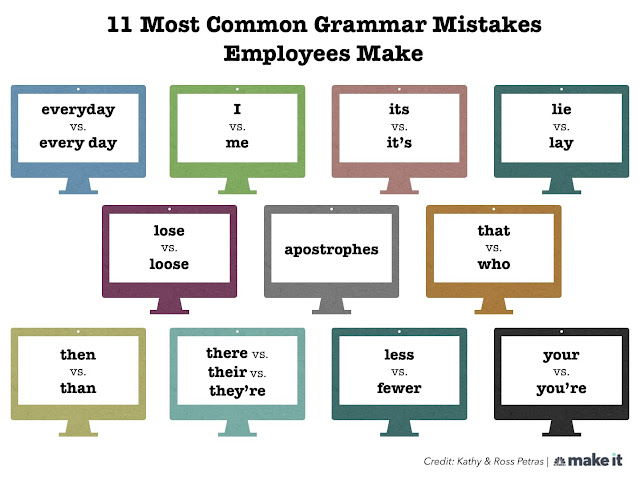
The conversation, on some Facebook groups for authors this month, turned to common mistakes in English grammar. As a wordsmith, I cringe at typos, misspellings, and grammar blunders in professional books. And I’m talking about simple mistakes, not wrong tenses, dangling participles, or run-on sentences. In the media arena, the language of Shakespeare is taking a beating. But it’s a lot worse than you would expect.


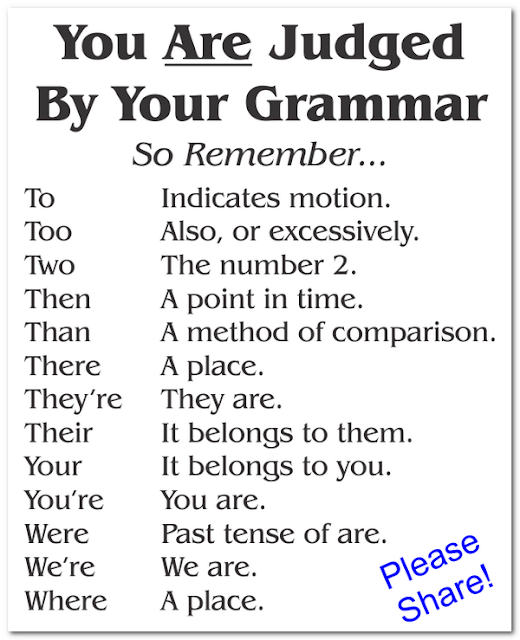
Here is a reminder of a few common mistakes… are you guilty of those? Maybe you should stick this note to the side of your tablet or computer screen.


And these are only a few. There are many more. I particularly resent “it’s” instead of “its” and “than” instead of “then.” There is also “lie” and “lay,” “affect” and “effect,”


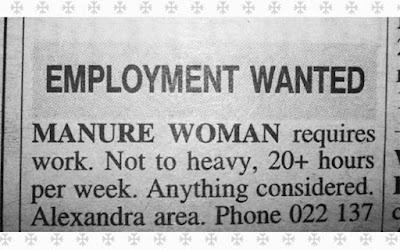
I can easily forgive readers and casual posters for not remembering their schooling. But if you make any of these common mistakes on your resume, for instance, you may well have forfeited the job.


And if you run an ad for your business with a mistake in it, the return will be so low, you’ll lose your investment in advertising.


Furthermore, I see these common mistakes repeated by newscasters, on advertising spots, on printed ads, and in articles by news writers and other professional people of the spoken and written word.


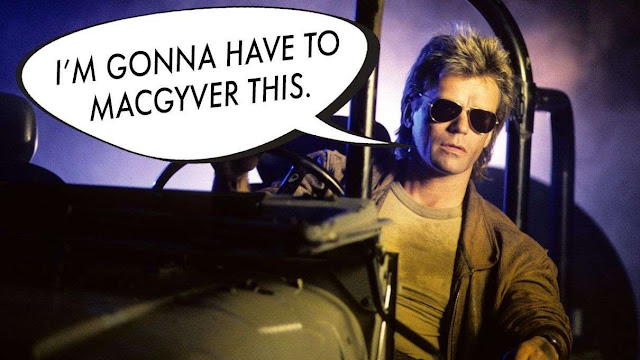
What about “verbing” or “verbification?”

There is also the new tendency of making verbs with nouns, called “verbing” by the Oxford University Press, or also verbification. This is part of normal language evolution. When there is no verb to express the action, you can use a noun as a verb. “To parent,” for example, has become part of the vocabulary, like “to vacation.”


It used to be that the printed word was respected and valued. Nowadays, anyone can write and print anything, without any knowledge of proper language, grammar, or spelling. Worse, they do not hire an editor. If it’s important enough to say or write for the public at large, it’s important enough to be edited.

Another way to improve your grammar is to read well written books. Here is the Curse of the Lost Isle series, Medieval Celtic legends come to life. Enjoy.
Vijaya Schartz, author
Strong Heroines, Brave Heroes, cats
http://www.vijayaschartz.com
amazon - B&N - Smashwords - Kobo - FB


Tuesday, November 23, 2021

Presenting at the 2021 Arizona Literary Awards Banquet, November 6, 2021, at the Glendale Civic Center Plaza

Slowly the pictures are starting to surface from the November 6, 2021 Arizona Literary Awards Banquet. Here are the hosts, Toby Heathcotte, current President, and Vijaya Schartz, Former President, 2029 winner, and current Blogmistress.


The theme was 'Those were the days, my friend..." and many attendees, mostly nominees for the awards and their guests, chose to wear a costume. Here is the costume contest winner, Miss Butterfly in all her splendor. The costume is based on one of her published children's books.

Costume contest winner - Maureen Scanlon

Other notable costumes:


It was a wonderful event. The Mexican buffet was fantastic, and the deserts divine.


Then came the time for the awards, recognition, and speeches from the winners. On the left, Janet Crum, and on the right, Maureen Scanlon.


More pictures of costumed guests: Here Marty Feess and guest.

 
And, of course, group pictures:


It was a wonderful event. 

Vijaya Schartz
http://www.vijayaschartz.com 

Friday, September 24, 2021

An author's definition of success - by Vijaya Schartz

Success means different things to different people. Even among writers, opinions vary. And your opinion of yourself as a writer will depend upon your personal definition of success.


For some, it's about making lots of money, a common beginner's mistake. For nonfiction authors, it can be about sharing your experiences, reporting the news, or proving your worth to your colleagues or your family.

For novelists, it can be about finding a publisher, or getting their stories published and read some other way. It can also be about recognition. Winning awards is important for a fiction writer, since we work in isolation for months on end to write a novel.

We all have different goals. I always liked the saying "If you do what you love, you'll never work a day in your life." Writing to me is a passion, It fills my days with wonder.

The same way I loved studying so much as a kid, that I wanted to be in school for the rest of my life, I love writing. And I'm so happy that I can write every day.

The fact that I found a publisher who loves my books is the cherry on top. And when my readers tell me they love my stories, that's the sweetest reward. That's when I know I succeeded. Angel Fierce, Azura Chronicles Book 2, won the 2019 Arizona Literary Contest. Angel Brave, Book 3, is a brand new release this month.

amazon - B&N - Smashwords - Kobo 


Vijaya Schartz, author
Strong Heroines, Brave Heroes, cats
http://www.vijayaschartz.com
amazon - B&N - Smashwords - Kobo 


Monday, July 12, 2021

The importance of book covers, especially in series - by Vijaya Schartz


This is the cover reveal for my October release
Angel Brave, Azura Book 3
As an author, I see images in my head when I write. Like a 3D movie, with sounds and lights and special effects, and color, and smells, and heat, and cold… and all these elements end up in my story. So, I have a pretty good idea of what my characters look like, sound like… and I want my readers to see the same movie in their heads as they read the book. So I do make suggestions to the artist cover designer, here Michelle Lee, and this latest cover does reflect my vision perfectly.

Chuck Lorre, creator of The Big Bang, Young Sheldon
Two and a half men, The US of Al, and many award-winning sitcoms.

I remember something Chuck Lorre wrote in a vanity card at the end of a show. I paraphrase: “I learned over the years, not to obsess over whether or not the actor looks like the character in my head, but rather to find a talented actor who will make the character his or hers.”

And here resides the secret of success. Learning to let go of the characters we created to let the reader re-imagine them. I’m certain authors whose stories make it to the screen struggle with the same problem. How the movie director, the screenwriter, and the producers see the characters often differs from what the original novelist had in mind.

The Archangel Twin books
Evil has many faces, not all of them human...

Sometimes, the book cover reflects my vision of the characters, and sometimes not. And who is to say which is best? My idea of Michael was very different, but I do love the new covers for the Archangel twin books.

Byzantium (Space Station) series, action, romance, and telepathic cats

Then, there is the cover without people on it, a trend which comes and goes with the seasons. It portrays adjacent scenery or an animal relevant to the story. Like in the Byzantium Space Station series, with telepathic cats as secondary characters.

Chronicles of Kassouk - Sci-fi Romance with big cats

In a series, there is also the concern for continuity. A long time ago, with another publisher, I received a cover that was unacceptable. It was book 3 in a series, and while the first two book covers featured photographs of male cover models (it was sci-fi romance) the cover of Book 3 was a comic book drawing with juvenile UFOs and little green men. It took me a while to figure out a nice way to tell the person in charge that this cover, while lovely, didn’t fit the mood of the story, and most importantly didn’t match that of the two previous books. Ooopsie!

Ancient Enemy series - Sci-fi Romance

All the book covers in a series should reflect the same palette, ambiance, font, design, etc. so the potential reader can recognize a book as belonging in a familiar series. Like The Curse of the Lost Isle, or the Chronicles of Kassouk.

Curse of the Lost Isle, Celtic Legends, Paranormal Romance

This said, I hope you’ll check out all these titles on my pages below.

Happy Reading!

Vijaya Schartz, author
Strong Heroines, Brave Heroes, cats


Thursday, June 10, 2021

Warrior women Part 3 - 16th Century to today - by Vijaya Schartz


Find Vijaya's novels at BWL Publishing HERE and on her website HERE


Amina, Warrior Queen of Zaria (1588-1589)

Amina was queen in a part of Nigeria now known as Zaria, where women could inherit the throne on an even keel with men. Many city states dominated trans-Saharan trade after the collapse of the Songhai Empire to the west. At the age of sixteen, Amina became the heir apparent. Although her mother’s reign was known for peace and prosperity, Amina immersed herself in military skills from the women warriors of her tribe.


Three months after her ascent to the throne, Amina started her conquests to expand her domain and open safe trade routes. She remained a warrior queen for 34 years until her death.

India during the Raj (British occupation): Velu Nachiyar (1730–1796 AD)

Queen of Sivaganga from 1780 to 1790, Velu Nachiyar was the first female freedom fighter against the British. Also known as Veeramangai (brave woman), she was trained in martial arts, horse riding and archery. She was also fluent in French, English and Urdu. 

After her husband was killed by the British army, she took refuge with Haider Ali, the Sultan of Mysore, then she launched her attack. When her daughter was martyred in the fight against the British, the queen formed a women’s army and named it after her daughter. Her fearlessness and gallantry on the battlefield are still remembered today.


Nakano Takeko, last female Samurai of Japan

The last Samurai warrior woman, Nakano Takeko, was recorded in the 19th century. During the Battle of Aizu, she led a corps of female Samurai against the Emperor's forces. She fought with a naginata, the traditional weapon of choice for Japanese women warriors.

Takeko was leading a charge against the imperial troops when she took a bullet to the chest. Knowing she would die, the 21-year-old warrior ordered her sister Yuko to cut off her head and hide it from the enemy. Yuko did as asked, and Nakano Takeko's head was buried under a tree.


The struggle of 20th Century women to be accepted in the military.

I remember when I was a teenager, learning that the Israeli military accepted women in their ranks. Not wearing skirts and typing reports in an office, but in combat gear on the front lines. I was fascinated.

First Israeli women in the military

Since then, after much hesitancy concerning the battlefield, the US military is training women for combat. They are now fighter pilots, foot soldiers, Marines, and much more.

US Fighter pilots

US Navy Seals


But this is a phenomenon happening around the world. We see battalions of fighting Amazons in Russia, women soldiers in Africa, in India, in the middle east. The women have risen and are taking control of their own lives, to defend their freedom, their rights, their land, or their family.
Warrior Women of Kenya


Women in India's Military Police


Russia's battalion of Amazons

Kurdish women fighting ISIS

If you like strong heroines with a warrior slant, check out my books. In my novels, they are bounty hunters, law-enforcement officers, Avenging Angels, soldiers, starship captains, Amazons, and warrior queens. They are often in charge, and playing an important role in their society. Sometimes, they rescue the hero, and they are definitely his equal.

I especially recommend these to lift your warrior spirits. Book 1, Angel Mine is 99cts in kindle, Book 2, Angel Fierce, is an award-winner, and Book 3, Angel Brave, is coming in October.


There is a planet out in the universe, emitting a strange turquoise glow. A long time ago Azura refused to join the Trade Alliance. The Alliance sent their military fleet to destroy the Azurans, but their powerful supernatural abilities spread fear even among the fiercest Devil Dogs. Since then, records have been erased. Rumors and legends all but died. Azura is strictly forbidden, and the daring few who venture beyond the warning space beacons are never seen again...

Happy Reading

Vijaya Schartz, author
Strong Heroines, Brave Heroes, cats
http://www.vijayaschartz.com
amazon - B&N - Smashwords - Kobo - FB


Thursday, May 13, 2021

Warrior Women Part 2 - The Dark Ages and the Middle Ages - by Vijaya Schartz

 Queen Boadicea or Boudicca of Roman Britain


Early on, Boudicca was publicly flogged by the Roman occupants for claiming her father’s crown and lands, and treated like a slave despite her rank. Then she was forced to watch the rape and torture of her two daughters, who were about 12 years old.

An ancient historian tells us that this Celtic queen of the Iceni “possessed greater intelligence than often belongs to women.” She is represented with waist-length, flaming red hair, wearing a gold torque and colorful clothing.

With a piercing gaze and a harsh voice, she rallied the Celtic tribes into an army of 100,000 and killed 80,000 Roman soldiers with superior armament. With her daughters, she led the charge on her light chariot, carrying flaming torches, like raging Furies.

Decimated at first, the Romans eventually received more reinforcements, the Celts lost and were exterminated. Boudicca, who survived the last battle, escaped, only to kill herself with poisonous hemlock. She refused to be paraded in Rome as a vanquished enemy.


Norse mythology - Valkyries and shieldmaidens

Norse legends speak of Valkyries, heavenly shieldmaidens, who flew over the battlefield and collected the souls of brave warriors slain in battle. So, for a long time, history assumed the stories of Viking Warrior Women to be legend as well.

A Viking grave from the tenth Century in Birka revealed weapons, gaming equipment, and two horses. Assumed to be that of a powerful Viking warrior, the skeleton suggested the person was female. Recently, a DNA analysis confirmed the powerful warrior was indeed a woman.

In truth, the Vikings counted many shieldmaidens in their ranks. Many were mentioned throughout history. Now, we know they were real.

One of the most famous Viking warrior women is Lagertha, wife of Ragnar, portrayed prominently in the History Channel series Vikings.


Japan’s Samurai women

Since the 12th century, many women of the Samurai class learned how to handle the sword and the naginata primarily to defend themselves and their homes. In the event that their castle was overrun by enemy warriors, the women were expected to fight to the end and die with honor, weapons in hand.

The Onna Bugeisha were female Samurai trained to protect entire villages and communities, not only the family property. If a Samurai had no son, he reserved the right to train his daughters as full-time onna bugeisha.


Rather than sitting at home waiting for the fight to come to them, some young women with exceptional fighting skills rode out to war with the men. They behaved like Samurai. They had the strength to fight with two swords. They could enlist in the army of a daimyo and fight side by side with male Samurai. They wore the attire and the hairstyles commonly worn by the men of the army.

An example of such an onna-bugeisha is Tomoe Gozen. Of course, like many warrior women of her time, official history labeled her more of a legend than a real person. But nowadays, we know better…


Joan of Arc - Medieval Warrior maiden – 1412-1431

As France was losing at home against the English during the 100-year war, this teenage peasant girl, a maiden, managed to convince the heir to the throne of France to give her control of his flailing armies. Among the chaos of war, she secured and attended his coronation.

As a keen strategist, Joan of Arc won many battles for the king of France. She didn’t hesitate to reprimand prestigious knights for swearing, behaving indecently, skipping Mass, or dismissing her battle plans. Personal attacks by the English, who called her rude names and joked that she should return home to her cows, upset her greatly.

Joan of Arc wore weapons and armor and brandished a standard as she led her men to battle. But it is said she never killed anyone. She was wounded at least twice, taking an arrow to the shoulder during her famed Orléans campaign and a crossbow bolt to the thigh during her failed attempt to liberate Paris.

Betrayed and delivered to the English, she was imprisoned. After she made a solemn promise never to wear men’s clothes again, they stole her woman’s clothes, forcing her to dress like a man. With the complicity of a French Bishop, they condemned her for that crime. They also condemned her for cutting her hair like a man, hearing voices, and being convinced she was following the will of God. She was burned at the stake in Rouen in 1431. She was 19 years old.

In my writings, I like to portray warrior women. Here is my medieval maiden in the Celtic legends Curse of the Lost Isle series. Damsel of the Hawk is a standalone in the series. Find it on Amazon HERE Find it at BWL Publishing HERE

1204 AD - Meliora, the legendary damsel of Hawk Castle, grants gold and wishes on Mount Ararat, but must forever remain chaste. When Spartak, a Kipchak warrior gravely wounded in Constantinople, requests sanctuary, she breaks the rule to save his life. The fierce, warrior prince stirs in her forbidden passions. Captivated, Spartak will not bow to superstition. Despite tribal opposition, he wants her as his queen. Should Meliora renounce true love, or embrace it and trigger the sinister curse... and the wrath of the Goddess? Meanwhile, a thwarted knight and his greedy band of Crusaders have vowed to steal her Pagan gold and burn her at the stake...

Happy Reading

Vijaya Schartz, author
Strong Heroines, Brave Heroes, cats
http://www.vijayaschartz.com
amazon - B&N - Smashwords - Kobo - FB